Back to all projects

Business intelligence · Marketing technology · Automation

Nexus Marketing Intelligence

Turning disconnected marketing data into a clearer picture of commercial performance.

Marketing reporting is only useful when it helps people make better decisions. I built Nexus to connect acquisition activity, lead quality, sales outcomes and financial performance in one place — reducing the time spent assembling reports and making it easier to understand what actually drives business results.

SalesforceMarketing CloudGoogle AdsSearch ConsoleDialler dataLLMs
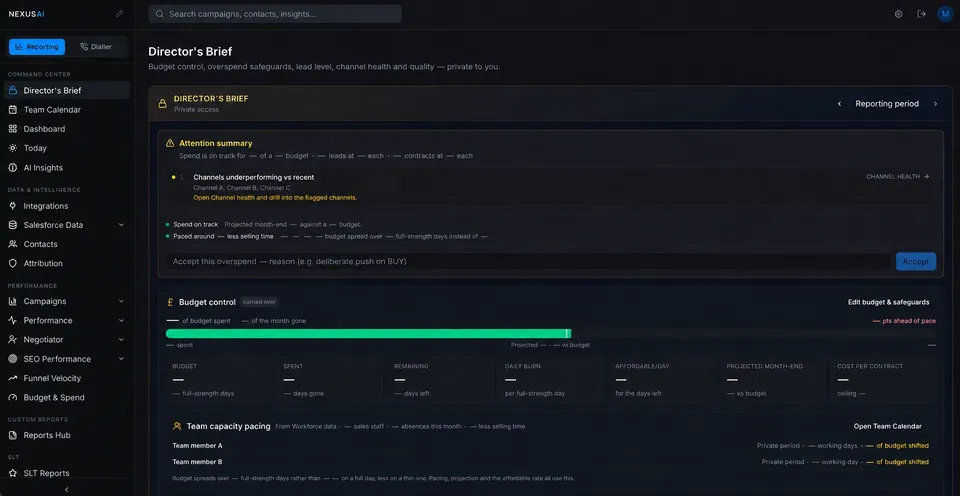
Anonymised Nexus Director's Brief dashboardLive interface
My involvementIndependently conceived and built the platform; ongoing development and refinement
Project typeBusiness intelligence · Marketing technology · Automation
StatusLive and evolving
TimeframeReliable first version in ~1 month; iterated since

01 / The challenge

The challenge

The business had multiple systems holding different parts of the customer journey. Marketing platforms could explain spend and enquiries, while CRM data held the eventual commercial outcomes. Connecting those dots was cumbersome. Existing reporting through Datorama could be slow, difficult to adapt and expensive to maintain, with some reporting exercises taking hours or even days.

That created a familiar problem: plenty of data, but too much effort required to turn it into useful information. I wanted to make the reporting process faster, more accessible and more directly connected to business decisions.

02 / My involvement

My involvement

Nexus began as an idea I developed and built independently. I produced the first reliable, usable version in approximately a month and have continued extending it in response to practical business requirements. This was hands-on product development, not simply commissioning a dashboard from an external supplier.

My role has included identifying reporting gaps, designing the experience, connecting data sources, building functionality, testing outputs and refining how information is delivered to different teams.

03 / Building a connected intelligence layer

Building a connected intelligence layer

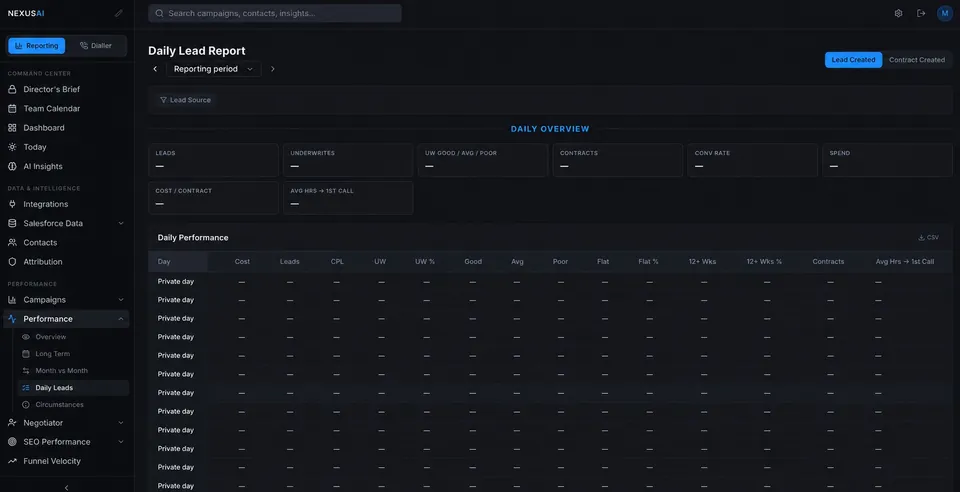
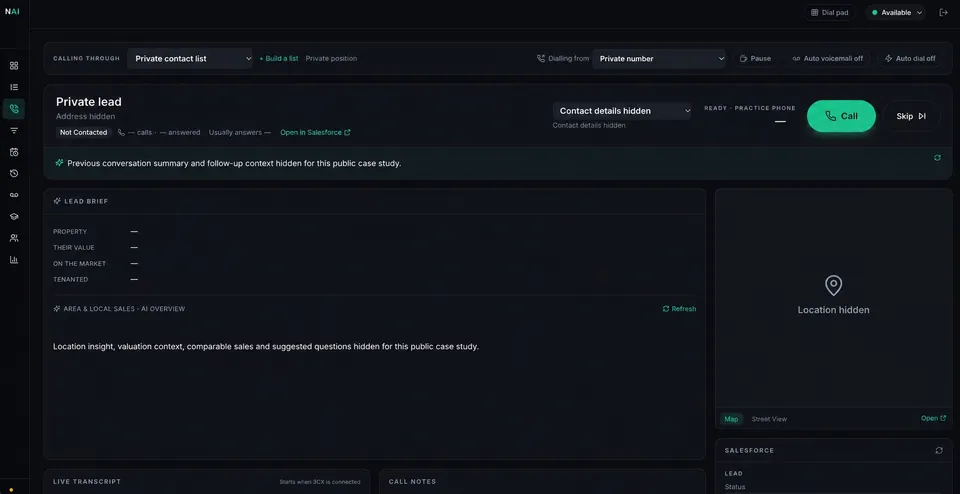
The platform integrates information from Salesforce, Salesforce Marketing Cloud, Google Ads, Google Search Console, the calling system and AI services. Its purpose is not to display every possible metric; it is to bring the most relevant information together so that marketing and commercial performance can be assessed in context.

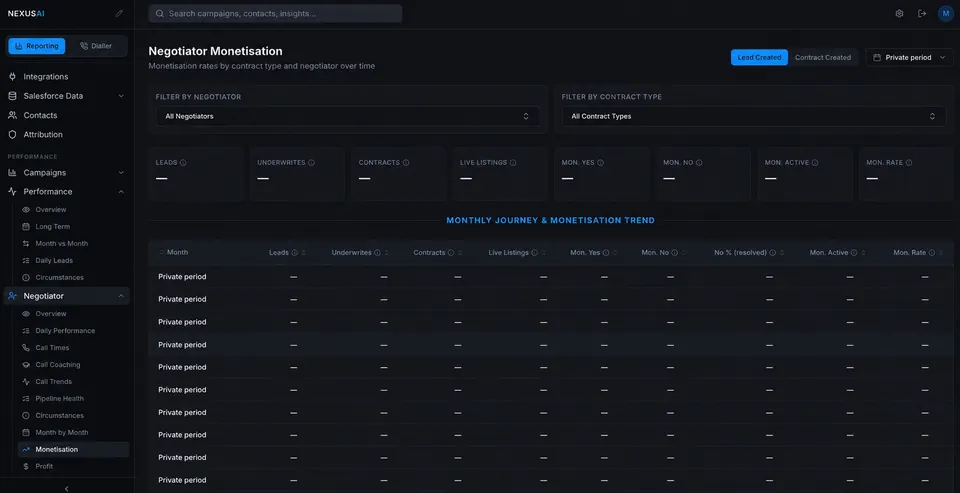
A particularly important capability is connecting acquisition activity with eventual monetisation. Rather than stopping at clicks or leads, Nexus can analyse downstream performance and trace commercial outcomes back to the acquisition source, including individual paid-search keywords where the data supports it.

Nexus also distributes relevant daily and weekly reports automatically. Different teams and the board can receive the information they need without waiting for someone to manually extract, combine and format it.
04 / Key capabilities

Key capabilities

01

Acquisition-to-outcome attribution

Connects campaign and lead data with CRM outcomes to provide a more commercially meaningful view of performance. This helps distinguish channels and keywords that generate enquiries from those associated with valuable outcomes.

02

Historical-data-led lead scoring

Uses lead-form information alongside historic conversion and monetisation patterns to calculate a lead score, which is passed back to Salesforce when a lead qualifies. This is a scoring and insight feature; it does not automatically change lead ownership or routing.

03

Intelligent budget pacing

Takes account of actual advertising schedules, staffing patterns, holidays and the remaining available days when assessing whether campaigns are likely to over- or underspend. The aim is to make pacing recommendations more realistic than simply dividing a monthly budget by the number of calendar days.

04

Automated reporting

Creates and distributes daily and weekly views for relevant operational teams and senior stakeholders, with consistent definitions and less manual intervention.

05

A more useful view of performance

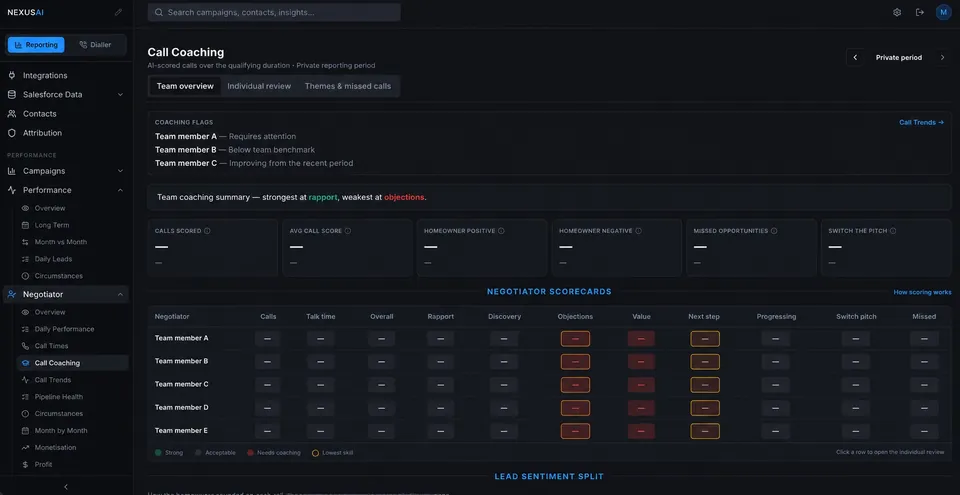
Brings reporting, trends and commercial context together in one environment rather than forcing users to switch between multiple platforms and spreadsheets.

05 / The outcome

The outcome

Nexus is live and used across teams, with access provided to the people who need it. Reporting tasks that previously took hours or days can now be completed in minutes, and automated distribution has reduced the amount of routine report preparation. It has also reduced reliance on expensive third-party reporting software, although I do not publish a specific savings figure.

The more important outcome is a change in how information can be used: decisions can be informed by connected acquisition and commercial data rather than isolated marketing metrics.

06 / What I learned

What I learned

The hardest part of a reporting platform is rarely drawing the charts. It is defining the right questions, connecting imperfect data sources and making sure the outputs are trustworthy and actionable. Building Nexus reinforced the value of starting with a real operational problem, shipping something useful and improving it continuously.

System view

A simplified view of the moving parts.

Conceptual only. No confidential data or interfaces are shown.

01Ad platforms
02Website & forms
03Salesforce
04Nexus
05Reports & scores